

You can buy a new Executive Condominium (EC) from a developer only if your household clears four gates at once: an eligible family nucleus with the right citizenship mix, every applicant at least 21 (or 35 for the Joint Singles Scheme), a total gross monthly household income of no more than $16,000, and no private residential property owned or disposed of within the last 30 months. Miss any one of these and the application does not proceed, regardless of how strong the other three look.
Before you approach a developer or bank, confirm you meet all of the following:
- At least one applicant is a Singapore Citizen; other applicants must be SC or SPR depending on the scheme
- Every applicant and occupier is listed and meets the age threshold for that scheme
- Total household income across all listed persons stays at or under SGD 16,000 a month
- No one in the application has owned or disposed of private residential property in the past 30 months
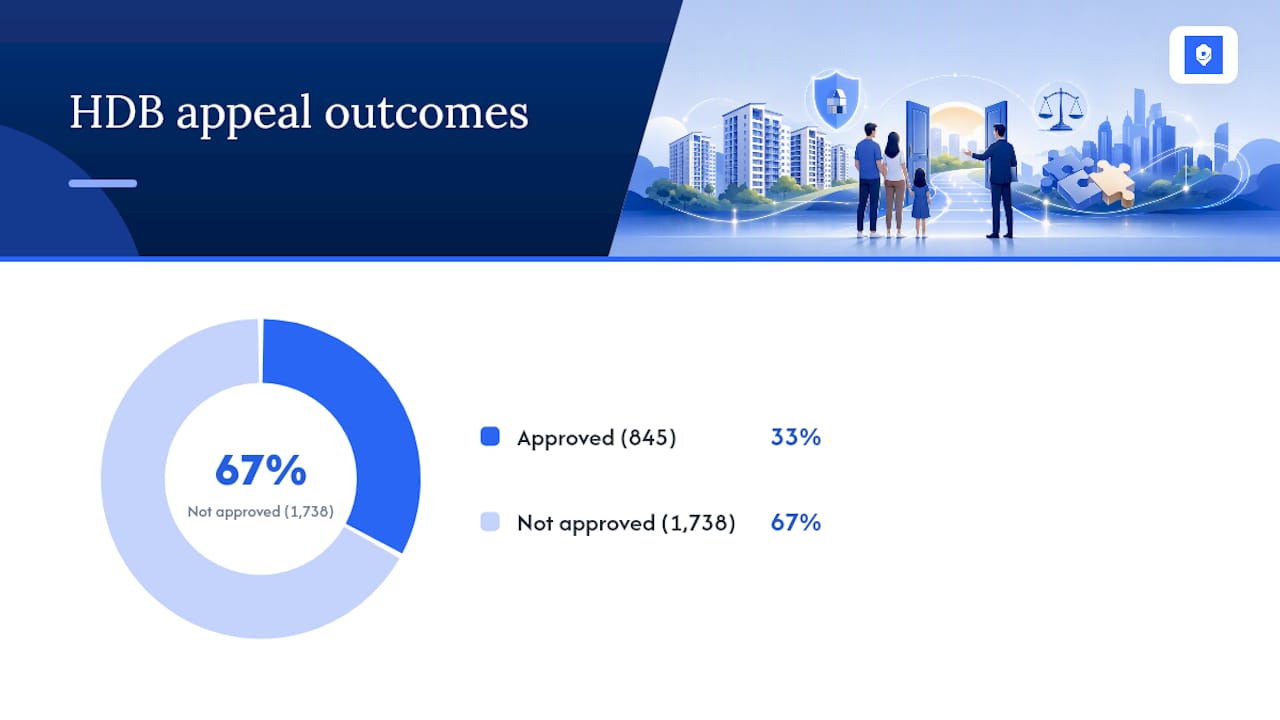
Pro Tip: If your household income sits only slightly above SGD 16,000, don't assume you're automatically shut out. HDB reviewed 2,583 income cap waiver appeals between 2020 and 2025 and approved 845 of them — roughly one in three. It's case‑by‑case, not automatic, but it's worth trying before you write off the EC route entirely.
Key Takeaways
EC eligibility in Singapore hinges on meeting the citizenship, age, income, and property-ownership rules simultaneously, since failing any single condition blocks the application regardless of the others.
| Point | Details |
|---|---|
| Income ceiling is fixed | Total gross monthly household income across all listed persons must not exceed SGD 16,000. |
| Property history matters | No listed applicant can have owned or disposed of private residential property within 30 months of applying. |
| Scheme determines who applies together | Public, Orphans, and Joint Singles schemes each set different age and citizenship requirements. |
| Second-timer status has cash consequences | Prior housing subsidies can trigger a resale levy payable at booking. |
| Plan affordability, not just eligibility | Tools like haio help you confirm loan quantum and mortgage rates once eligibility is confirmed. |
This article is general information, not a substitute for advice from a qualified financial advisor. Consult a qualified financial professional about your own circumstances before acting on anything here.
Table of Contents
- EC eligibility Singapore: the full statutory checklist
- Which family schemes qualify you to apply for an EC?
- What counts towards the SGD 16,000 income ceiling?
- Does owning other property disqualify you from an EC?
- How do past subsidies and resale levies affect your eligibility?
- How does MOP affect resale EC eligibility for buyers?
- How do you check your EC eligibility before applying?
- Sources
EC eligibility Singapore: the full statutory checklist
HDB assesses EC applications against a fixed set of conditions, and every one of them needs to be satisfied at the point of application, not just at booking. Here's what that looks like in practice.
- Citizenship and residency. At least one applicant in the household must be a Singapore Citizen. Depending on the scheme you apply under, the remaining applicants must be either SC or Singapore Permanent Residents, as set out in HDB's eligibility rules.
- Age. Applicants generally need to be at least 21 years old. Singles applying jointly under the Joint Singles Scheme must each be at least the minimum age specified by HDB.
- Household composition. Everyone listed as an applicant or occupier must remain on the application and physically occupy the EC once it's built, through the Minimum Occupation Period. This isn't a paperwork formality; HDB treats the household as a single unit when it checks subsidy and ownership history.
- Income ceiling. Total gross monthly income across all persons listed in the application must not exceed SGD 16,000. That figure aggregates wages, allowances, and other regular income from every listed applicant and occupier, not just the main breadwinner.
- Property ownership gate. No one on the application can have owned or disposed of private residential property, locally or overseas, within the 30 months before applying.
- Financing reality. New ECs are not eligible for an HDB concessionary loan. You'll need financing from a bank, which means checking your Total Debt Servicing Ratio and Mortgage Servicing Ratio limits alongside HDB's own criteria, a point often overlooked by first-time buyers.
A few practical flags worth noting before you go further:
- Bring documentation for income, past property transactions, and citizenship status before you speak to a bank
- Check your CPF Ordinary Account balance early, since it affects both your loan quantum and your cash outlay at booking
Which family schemes qualify you to apply for an EC?
HDB doesn't just check individuals; it checks family units. The scheme you apply under determines who can be listed together and what the minimum age and citizenship mix must be.
- Public Scheme. Covers married couples, parents applying with children, and engaged couples (fiancé/fiancée) intending to marry. At least one applicant must be an SC, with the household typically containing a mix of SC and SPR members.
- Orphans Scheme. Allows single siblings who have lost both parents to apply together, provided the basic citizenship conditions tied to their late parents' SC or SPR status are met and they're jointly listed on one application.
- Joint Singles Scheme. Lets two or more unmarried Singapore Citizens, each at least 35, apply together for one EC. Unlike the Public Scheme, every applicant here must be SC, not SPR.
A young couple in their late twenties, one SC and one SPR, planning to marry within the year, would typically apply under the fiancé/fiancée route within the Public Scheme. Two SC friends in their late thirties who've decided to co-own instead of renting would look at the Joint Singles Scheme. If you're weighing up unit size or layout alongside eligibility, it helps to think through family condo selection criteria at the same time you're confirming which scheme applies to you.
What counts towards the SGD 16,000 income ceiling?
The ceiling is fixed: total gross monthly household income across every person listed in the EC application, applicants and occupiers alike, must not exceed SGD 16,000. HDB assesses this at the point you submit your application, using income drawn from the relevant assessment period rather than a single payslip.
Bonuses, commissions, and irregular freelance income all get folded into the calculation, which catches out buyers who assume only base salary counts. If your income fluctuates, gather at least the past few months of statements before applying so you're not guessing at your own number.
- Include CPF contributions data, recent payslips, and Notice of Assessment documents when preparing your case
- Flag any recent bonus or variable-pay spike to your loan officer early, since it can tip you over the ceiling unexpectedly
Pro Tip: If your household narrowly exceeds SGD 16,000, the appeal channel exists precisely for cases like yours. HDB's own figures show it approved 845 of 2,583 appeals between 2020 and 2025, close to one in three. It's not a guaranteed workaround, but it's a real one.
Does owning other property disqualify you from an EC?
Ownership history is one of the strictest gates in the entire EC eligibility framework, and it catches more applicants off guard than the income ceiling does.
Every person listed on the application must not have owned or disposed of completed or uncompleted private residential property, an EC unit, a privatised HUDC flat, or land zoned for residential use, within the 30 months before applying. The clock starts from the legal completion date of the disposal, not the date you signed the sale agreement, so timing matters if you're planning to sell an existing property first.
For EC land parcels launched on or after 9 May 2023, HDB introduced a further limit: a household may hold an interest in no more than one non‑residential property at the point of application and in the 30 months before it. A commercial shop unit or an industrial property doesn't automatically disqualify you under the older rules, but check whether your target EC launch falls under this newer restriction.
- Private residential property includes condos, landed homes, and EC units still within their ownership restriction period
- Non‑residential property (shops, offices, industrial units) is treated separately, but only up to the one-property limit for post‑May 2023 launches
How do past subsidies and resale levies affect your eligibility?
Whether you've taken a housing subsidy before determines your status as a first‑timer or second‑timer, and that status carries real cash consequences at booking.
First‑timers get full grant entitlement and priority in EC balloting. Second‑timers, meaning anyone in the core family nucleus who has previously enjoyed a housing subsidy, such as a CPF grant or a subsidised flat, generally face a resale levy when they buy an EC. If a household has already used up two rounds of housing subsidies, it typically becomes ineligible for a further subsidised purchase altogether.
Wait‑out periods trip up plenty of buyers who assume their history is behind them. A cancelled flat booking commonly triggers a one‑year wait‑out before you can apply again, while some termination scenarios stretch to five years.
- Confirm your first‑timer or second‑timer status with HDB before you start viewing showflats
- Ask early whether a resale levy applies to your household, since it's payable in cash or CPF at a fixed point in the purchase timeline
Pro Tip: Work out your resale levy exposure before you book a unit, not after. It directly affects how much cash you need on hand at the point of sale, and surprises here derail more purchases than the income ceiling does.
How does MOP affect resale EC eligibility for buyers?
The Minimum Occupation Period has moved. Policy changes now extend the MOP for newer EC developments to 10 years, a shift aimed squarely at favouring owner‑occupation over short‑term flipping. If you're eyeing an EC as a stepping stone to resell quickly, that horizon just got longer.
Resale rules shift further once an EC clears its Temporary Occupation Permit. For ECs with TOP within the last 10 years, buyers still need to meet the same SC/SPR eligibility rules as new EC purchases. Once an EC has held TOP for more than 10 years, that citizenship requirement drops away entirely, opening the door to foreign buyers and giving these units a genuinely different buyer pool.
- Resale ECs that have met MOP are treated as private property: no CPF housing grants apply, and second‑timers buying one are typically exempt from resale levy
- Always engage a conveyancing solicitor for a resale EC purchase, since the paperwork and levy treatment differ meaningfully from a new EC bought directly from a developer
How do you check your EC eligibility before applying?
Confirming eligibility is a sequencing problem as much as a documentation one. Get the order right and the rest of the process moves faster.
- Work through HDB's eligibility pages against your household composition, age, and citizenship mix.
- Pull together income evidence, including payslips, Notices of Assessment, and CPF contribution histories, for every listed applicant.
- Confirm your first‑timer or second‑timer status and check whether a resale levy applies to your household.
- Speak to CPF Board about Ordinary Account funds available for the purchase, and approach a bank early to confirm TDSR and MSR limits, since new ECs need bank financing rather than an HDB loan.
Documents commonly requested at application and booking include identity cards for all applicants, income proof, marriage or birth certificates depending on your scheme, and property transaction records if you've owned or sold private property in the past three decades.
- Line up a solicitor for conveyancing before your booking date, not after
- Cross‑check your loan quantum with the bank before committing to a unit, so financing surprises don't derail the purchase
A publisher's note on buying an EC in 2026
Recent MOP extensions signal a clear policy shift towards long-term ownership over speculation. Treat an EC as a decade-plus home commitment, and get your eligibility and financing confirmed before you fall for a showflat.
How haio helps you plan an EC purchase
Once you've cleared the eligibility checklist, the harder question is affordability: what loan quantum a bank will actually offer, and whether the numbers still work after CPF and cash outlay. This is where haio fits into the process, not as another eligibility checker, but as a way to stress-test the purchase itself.
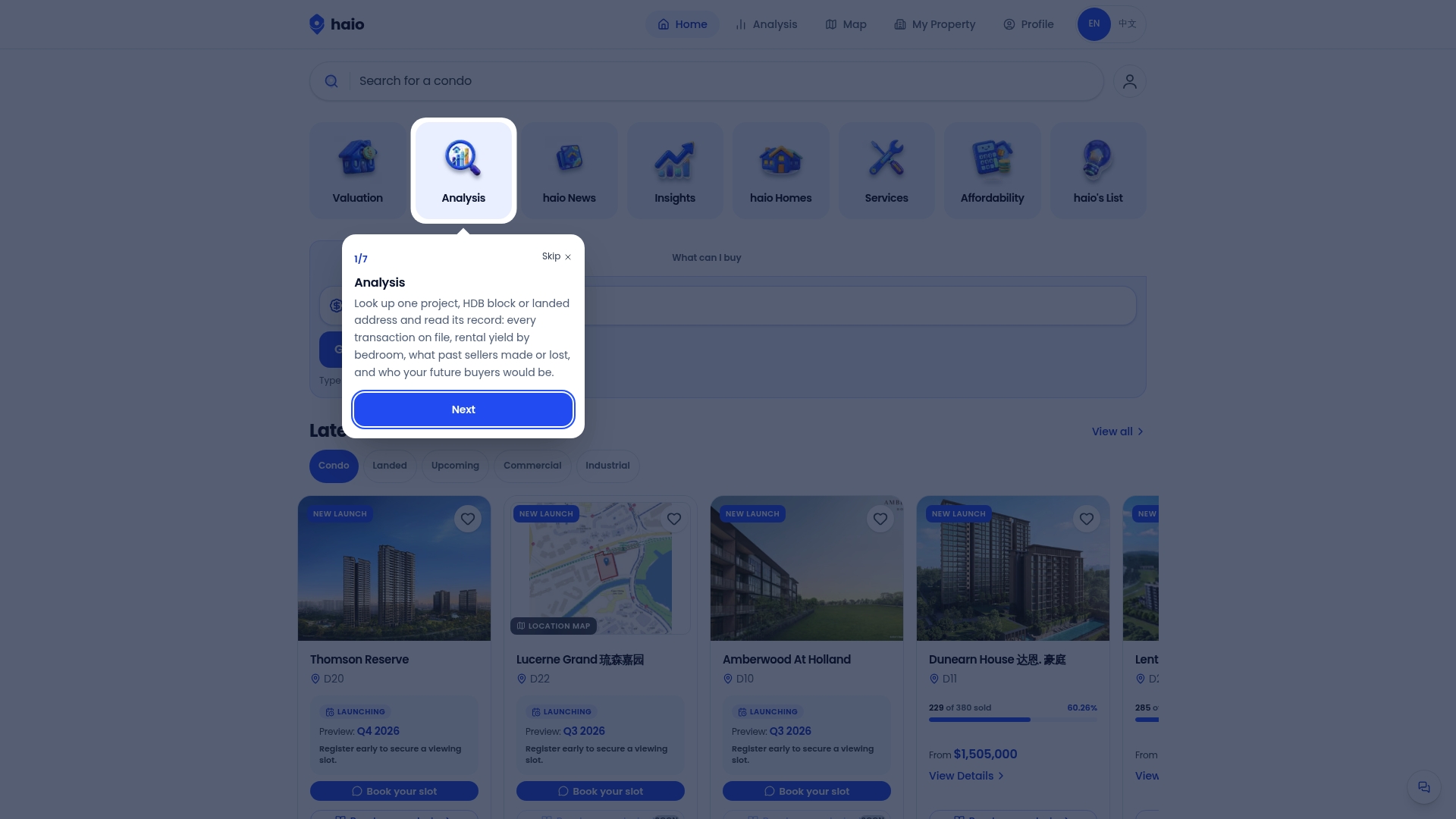
- Personalised affordability checks that factor in your income, CPF balance, and target loan quantum
- Live mortgage rate comparisons so you're not locking into a bank rate before checking alternatives
- Market trend data and valuation tools to judge whether a specific EC launch or resale unit is fairly priced
If you've confirmed you meet HDB's criteria and want a clearer read on what you can actually afford before booking a unit, run the numbers through haio's affordability tool first.