
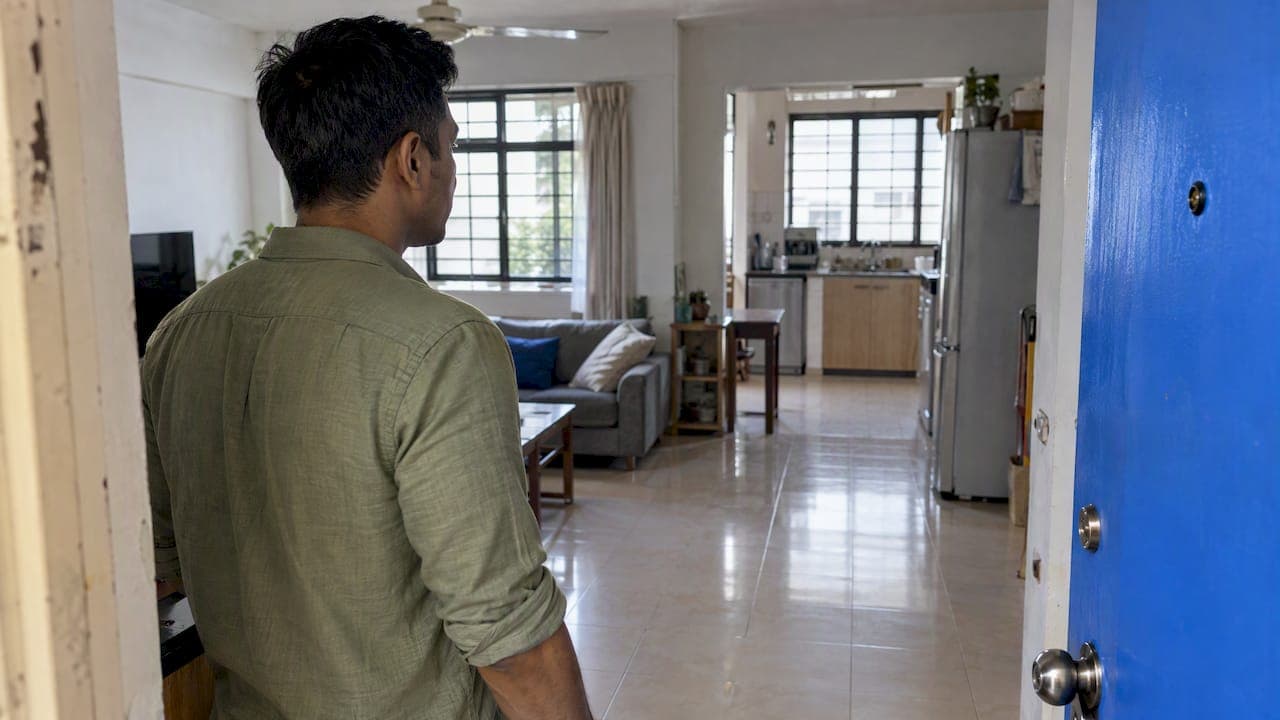
As of October 2026, Singapore's property cooling measures remain largely intact, with one significant exception: on 28 July 2026 the Government lifted the 15-month wait-out period that applied to private property owners buying non-subsidised HDB resale flats. The Additional Buyer's Stamp Duty (ABSD), the Seller's Stamp Duty (SSD), the Total Debt Servicing Ratio (TDSR) and Loan-to-Value (LTV) limits all continue to apply. This article sets out what each measure currently requires, what changed this year, and where the older rules still bind.
TL;DR
- The 15-month wait-out period for private owners buying non-subsidised HDB resale flats was removed on 28 July 2026; the 30-month wait-out remains for subsidised flats, Executive Condominiums (ECs) from developers and HDB housing loans.
- ABSD rates from 27 April 2023 still stand: 20% for a citizen's second property, 60% for foreigners and 65% for entities.
- SSD applies to residential properties bought on or after 4 July 2025 over a four-year holding period, at 16%, 12%, 8% and 4% by year.
- TDSR stays at 55% of gross monthly income for bank loans, and the MAS treats it as a structural, not cyclical, safeguard.
- Early evidence suggests the wait-out removal has had no discernible effect on resale prices or Cash-Over-Valuation (COV).
Table of Contents
- What counts as a cooling measure in Singapore
- The July 2026 change: the 15-month wait-out period is gone
- Additional Buyer's Stamp Duty (ABSD)
- Seller's Stamp Duty (SSD) after July 2025
- Borrowing limits: TDSR, MSR and LTV
- Which measures hit which buyer
- How the measures have shifted since 2021
- Our perspective: plan around the structure, not the headlines
- Run the numbers before you commit
- FAQ
- Sources
What counts as a cooling measure in Singapore
Singapore's cooling measures are a set of taxes, lending limits and eligibility rules introduced in stages since 2009 to restrain speculative demand and keep household borrowing sustainable. They fall into three groups:
- Transaction taxes: ABSD (paid by buyers according to profile and number of properties owned) and SSD (paid by sellers who dispose of a property within a set holding period). Buyer's Stamp Duty (BSD) applies to all purchases but is a baseline tax rather than a cooling lever.
- Lending limits: LTV limits on how much of a property's price or valuation can be borrowed, the TDSR for bank loans, and the Mortgage Servicing Ratio (MSR) for HDB and EC loans.
- Eligibility and timing rules: wait-out periods, Minimum Occupation Periods (MOP) and similar conditions on HDB and EC purchases.
Practitioners generally treat the stamp duties as baseline costs. The IRAS guidance on SSD-for-residential-property) shows why: the July 2025 revision lengthened the holding period rather than easing it, which points to a long-term strategy of dampening speculative activity, not a temporary adjustment.
The July 2026 change: the 15-month wait-out period is gone
The most recent policy move is the removal of the 15-month wait-out period. It was introduced in September 2022 to curb demand from cash-rich private home owners looking to buy non-subsidised resale HDB flats, according to The Straits Times. It was lifted on 28 July 2026, citing signs of market stabilisation and moderating resale price growth.
National Development Minister Chee Hong Tat described the decision as data-driven and said the measure had been designed as non-permanent, to be lifted once demand and supply stabilised. The Government continues to monitor resale and rental prices for unintended effects on affordability.
What the wait-out removal means in practice
The change applies to a specific buyer profile: owners and former owners of private residential property who want to buy a non-subsidised HDB resale flat. For them, the practical effects are:
- Private owners who sell and want to right-size into a resale flat no longer need to wait 15 months after the legal completion of the disposal before buying.
- Timing risk falls for those who must sell before they can fund the next purchase.
- Resale supply in the HDB market may attract a wider pool of buyers, which is the reason the Government says it will keep watching prices.
Haio's news desk has set out the downgrader angle in more detail in what the removal means for HDB downgraders.
What has not changed
The 30-month wait-out period still applies to private property owners and former owners who intend to buy subsidised flats, ECs from developers, or who require an HDB housing loan, according to the HDB. The distinction matters for anyone planning a downgrade: choosing a subsidised unit or an HDB loan extends the wait substantially, whatever the state of the wider market.
A common planning error concerns the start date. The wait-out is computed from the legal completion date of the disposal, not from the date of the Option to Purchase (OTP) or key handover, so owners should keep the official documentation showing the completion date.
Early market evidence
In a parliamentary reply on 6 October 2026, Mr Chee Hong Tat said the removal had produced no discernible change in HDB resale prices or COV up to that point. Separately, Real Estate Asia reported that HDB resale prices fell for a third consecutive quarter in Q3 2026, with the policy change prompting renewed buyer interest. The HDB flash estimate for Q3 2026 shows a 0.2% quarter-on-quarter decline in the Resale Price Index. Three months is a short window, and COV in particular tends to respond with a lag, so these readings are best taken as a baseline. For how upfront cash is determined, see the haio guide to HDB cash over valuation.
Additional Buyer's Stamp Duty (ABSD)
ABSD remains the heaviest cooling lever for buyers who already own property or are not citizens. The rates now in force, which apply on or after 27 April 2023, are listed on the IRAS ABSD page):
| Profile of buyer | ABSD rate |
|---|---|
| Singapore citizen, first residential property | Not applicable |
| Singapore citizen, second property | 20% |
| Singapore citizen, third and subsequent property | 30% |
| Singapore permanent resident, first property | 5% |
| Singapore permanent resident, second property | 30% |
| Singapore permanent resident, third and subsequent property | 35% |
| Foreigner, any residential property | 60% |
| Entity, any residential property | 65% |
Two points frequently cause confusion. First, the rate depends on the buyer's profile and on the count of properties owned, and for joint purchases the higher-profile buyer's rate applies, as IRAS illustrates with a citizen and a permanent resident buying together. Second, ABSD is payable upfront and cannot be financed through the loan in the way the purchase price can, so it must be budgeted from cash or CPF where permitted.
In January 2026, ERA called for a review of ABSD in the context of Budget 2026, arguing that moderating price growth provided room for it. No such change has been announced, and the rates above remain those IRAS publishes. Buyers planning a second property can find the combined ABSD and TDSR checks in the haio guide to buying a second property.
Seller's Stamp Duty (SSD) after July 2025
SSD discourages short-term resale. For residential properties purchased on or after 4 July 2025, IRAS states that the holding period was extended from three years to four, and each tier rose by four percentage points. Rates are:
| Holding period | SSD rate |
|---|---|
| Up to 1 year | 16% |
| More than 1 year, up to 2 years | 12% |
| More than 2 years, up to 3 years | 8% |
| More than 3 years, up to 4 years | 4% |
The duty is calculated on the higher of the selling price or market value, and the holding period is counted from the date of acquisition. Properties bought before 4 July 2025 remain under the earlier three-year structure. Because the duty is large relative to typical annual price movements, an investor selling in the first year would need a substantial gain merely to break even. Haio's explainer on the July 2025 SSD changes works through the calculation.
Borrowing limits: TDSR, MSR and LTV
TDSR at 55%
The TDSR caps total monthly debt obligations, including the proposed property loan, at a set share of gross monthly income. The MAS lowered the threshold from 60% to 55% with effect from 16 December 2021, and it stands at 55% in 2026. It applies to property loans granted by financial institutions.
The MAS has explained in its TDSR framework FAQs that the limits are meant to institutionalise prudent borrowing, not to respond only to market cycles. Borrowers are encouraged to allow for future interest rate movements when assessing their own commitments, and banks apply a stress-test rate rather than the headline rate.
A simple illustration, using round numbers: a household with S$10,000 gross monthly income and S$1,000 of other debt repayments would have room for S$4,500 of new monthly loan servicing under a 55% cap (S$5,500 less S$1,000). The worked examples in the haio guide to MSR and TDSR loan ceilings use actual stress-test rates.
MSR for HDB and EC loans
HDB and EC loans are additionally subject to the MSR, which limits mortgage repayments alone as a share of gross monthly income. Buyers using HDB financing therefore face both an MSR test and, where relevant, the TDSR, and the stricter outcome governs.
LTV limits and the cash component
LTV limits cap the share of the price or valuation that can be borrowed, and the cap falls with each additional housing loan held. For bank loans, part of the down payment must be in cash rather than CPF. Haio's note on LTV limits and the 5% cash requirement sets out the position by loan count, and it is worth checking the current figures with a lender before committing, as they depend on the borrower's existing loans and the loan tenure.
Which measures hit which buyer
| Buyer type | Measures most relevant in 2026 |
|---|---|
| First-time HDB buyer | MSR or TDSR, LTV, COV, MOP after purchase |
| Private owner downgrading to a resale flat | Wait-out (none for non-subsidised resale; 30 months for subsidised flats, developer ECs or an HDB loan), SSD if sold early |
| Owner buying a second property | ABSD 20% (citizen), TDSR, lower LTV |
| Permanent resident | ABSD 5% on first, 30% on second property |
| Foreign buyer | ABSD 60% |
| Investor flipping within four years | SSD 16% to 4%, plus ABSD where applicable |
One further timing rule affects those moving from an HDB flat to an EC: the HDB conditions for EC buyers require disposal of any interest in an HDB flat within six months of key collection of the EC unit.
How the measures have shifted since 2021
The direction of policy is more nuanced than a simple tightening or loosening. The December 2021 package raised ABSD and lowered the TDSR threshold to 55%. The September 2022 wait-out period was added for private owners buying resale flats. ABSD rose again in April 2023. SSD was lengthened in July 2025. The July 2026 removal is the first sizeable easing of the buyer-side rules in this sequence, and it is narrow: it touches a single eligibility condition, leaves every tax and lending limit in place, and was paired with an explicit commitment to keep monitoring prices.

This pattern is consistent with the Government's stated approach: adjust a measure when data show the conditions that justified it have eased, and keep structural safeguards (TDSR, LTV, stamp duties) in place regardless. Related ABSD housekeeping continues too; on 28 July 2026 the Government extended Category 1 ABSD remission timelines for large-scale redevelopment projects by licensed housing developers, which affects developers rather than individual buyers.
Our perspective: plan around the structure, not the headlines
We track every transaction and policy announcement on haio, and our reading of 2026 is that buyers are best served by treating the structural measures as fixed costs and the eligibility rules as the part most likely to move. Stamp duties and lending limits have persisted through rising and falling markets, so a budget that depends on their removal is a fragile one. The wait-out removal, by contrast, shows that timing rules do respond to data.

Two habits follow from this. First, calculate affordability against the stricter of MSR and TDSR using a stressed interest rate, then add ABSD or BSD and legal costs as cash. Second, test a purchase against the price record of the specific building or town, because a flat market average says little about a particular block. Haio's market trends analysis shows private prices up 1.4% and HDB down 0.2%, a divergence that a single national headline would hide. Rates matter as well: the current picture is in our note on Singapore mortgage rates and the MAS check.
We also think the early evidence deserves caution in both directions. A quarter without visible price movement does not prove the removal has no effect, and it does not prove the opposite either. Buyers who assume COV will stay flat, or sellers who assume it will jump, are both extrapolating from very little.
— HAIO
Run the numbers before you commit
Haio's Affordability tool tests a budget against current lending rules, and the Property Analysis page shows price history and transactions for the property you are considering. Free access covers the core transaction data; the haio+ subscription adds premium analytics and valuation reports at 49 S$ per month or 499 S$ per year.
FAQ
What are the current property cooling measures in Singapore?
The main measures are ABSD on buyers by profile and property count, SSD on sales within four years for properties bought on or after 4 July 2025, LTV limits, the 55% TDSR and the MSR for HDB and EC loans. The 15-month wait-out for private owners buying non-subsidised resale flats was removed on 28 July 2026. The 30-month wait-out still applies to subsidised flats, developer ECs and HDB loans.
Will the removal of the wait-out period push HDB resale prices up?
No effect has been observed so far. On 6 October 2026, the National Development Minister reported no discernible impact on resale prices or COV, and HDB resale prices fell for a third straight quarter in Q3 2026. The Government has said it will keep monitoring resale and rental prices, so the position could change.
Do I still pay ABSD on a second property in 2026?
Yes. A Singapore citizen buying a second residential property pays 20%, and a third or later property attracts 30%. Permanent residents pay 5% on a first property and 30% on a second. Foreigners pay 60% and entities 65%.
How is the wait-out period counted?
It runs from the legal completion date of the disposal of the previous property, not from the OTP date or key handover. Owners should keep the legal documents confirming the completion date and check their eligibility with the HDB before committing to a purchase.
Sources
- The Straits Times: 15-month wait-out period lifted
- The Online Citizen: Singapore removes 15-month wait-out period
- HDB
- SG Parliament: impact of removing the wait-out period
- Real Estate Asia: HDB resale market looks to private buyers
- IRAS: Additional Buyer's Stamp Duty)
- IRAS: Seller's Stamp Duty for residential property-for-residential-property)
- MAS: Measures to cool the property market
- MAS: TDSR framework FAQs
- IRAS: ABSD housing developers remission timeline extensions