
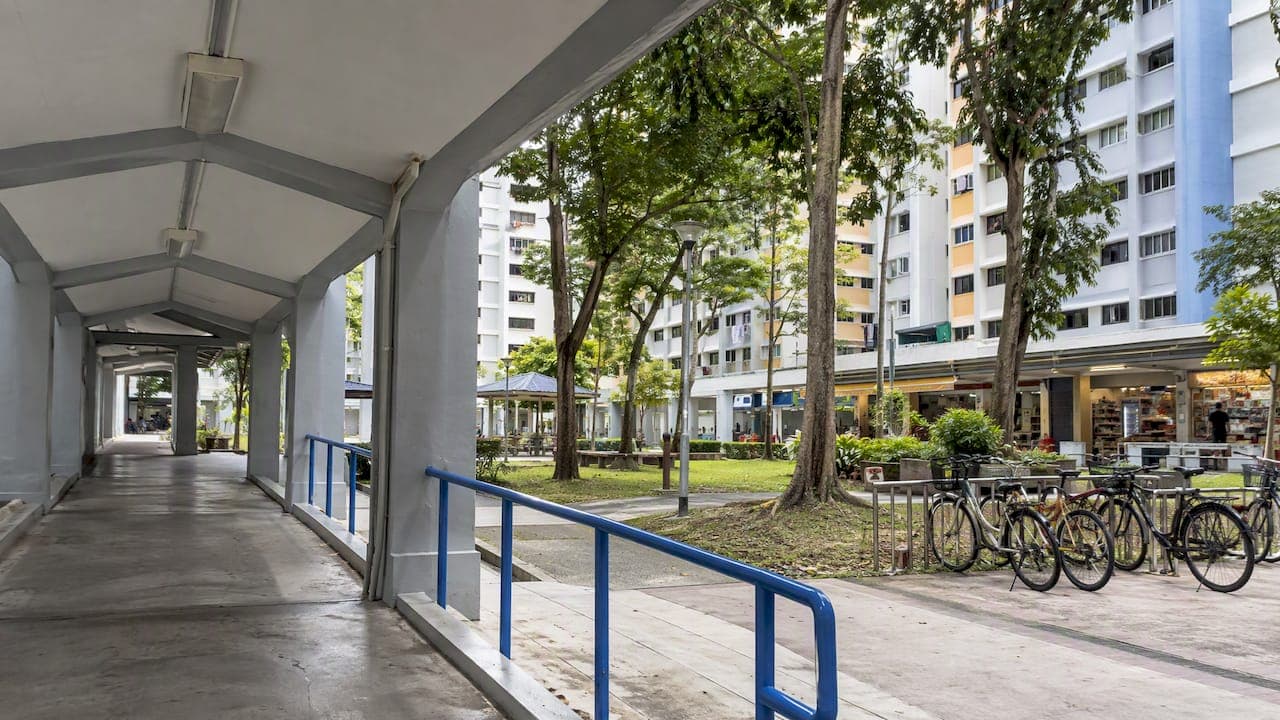
No single HDB town is the best in 2026; the answer depends on whether the priority is price, commute, lease length, rental income or long-term infrastructure. Punggol, Tampines, Bishan, Queenstown, Clementi, Hougang and Jurong West each lead on a different measure, and the gaps between them are large: in 1st quarter 2026 the median 4-room resale flat cost $535,500 in Jurong West and $1,038,000 in Queenstown, according to HDB's own data. This article compares those towns using official figures, explains what moves prices within a town, and sets out how to match a town to a purpose.
TL;DR
- Affordability favours Jurong West, Hougang and Tampines, while Queenstown, Bishan and Clementi carry the highest 4-room medians among the towns compared here.
- Punggol combines newer flats with large planned infrastructure (the Cross Island Line Punggol Extension is slated for 2032), at mid-range prices.
- Resale prices nationally have slipped for three consecutive quarters in 2026 (HDB's flash estimate for 3Q 2026 is a 0.2% decrease), so town-level choice matters more than timing the market.
- Within any town, remaining lease, floor level, condition and distance to the MRT often explain more of the price gap than the town name.
Table of Contents
- How the towns were selected
- Resale prices and rents by town
- Town-by-town assessment
- Which town fits which priority
- Resale performance and the 2026 market
- What explains price differences inside a town
- Rental considerations for tenants and investors
- Our perspective
- Checking a shortlist with haio
- Infrastructure to watch beyond 2026
- FAQ
- Sources
How the towns were selected
HDB's Our Towns and Estates directory covers every estate, but a shortlist is more useful than 26 profiles. The towns below were chosen because they combine high transaction volumes, distinct buyer propositions and published HDB statistics by flat type: Punggol, Queenstown, Tampines, Central Area, Clementi, Bishan, Hougang and Jurong West, with Toa Payoh and Serangoon mentioned where recent data makes them relevant.
A ranking by one number would be misleading. A 2026 liveability index by BlockIndex, which scores blocks across nine pillars with a balanced weighting, ranked Rochor and Outram highest by median block score, towns that rarely appear in popular shortlists because their flat supply is small and old. Liveability scores, transaction volumes and affordability measure different things, so this comparison keeps them separate.
Resale prices and rents by town
The table below sets HDB's median 4-room resale prices (1st quarter 2026) next to median 4-room rents from approved rental applications (4th quarter 2025). The two periods differ by one quarter, so the yield column is a rough indicator calculated for this article (annual rent divided by resale price, before costs, vacancy and financing), not an official figure.
| Town | 4-room resale median (1Q 2026) | 4-room rent median (4Q 2025) | Indicative gross yield |
|---|---|---|---|
| Jurong West | $535,500 | $3,500 | about 7.8% |
| Hougang | $617,000 | $3,250 | about 6.3% |
| Tampines | $668,000 | $3,400 | about 6.1% |
| Clementi | $781,000 | $3,850 | about 5.9% |
| Punggol | $685,000 | $3,200 | about 5.6% |
| Bishan | $805,000 | $3,700 | about 5.5% |
| Queenstown | $1,038,000 | $4,050 | about 4.7% |
| Central Area | not shown (fewer than 20 transactions) | $4,050 | not available |
Sources: HDB resale medians for 1st quarter 2026 (Annex C) and rental medians for 4th quarter 2025 (Annex D). HDB notes that resale figures are rounded to the nearest $100 and exclude certain non-representative transactions; a median is withheld where fewer than 20 transactions were recorded.
Two observations follow. First, the cheapest town to buy in is not the cheapest to rent in, because rents move less than prices across estates, which pushes yields up in lower-priced towns. Second, a high yield is partly compensation for something: older stock, a longer commute or slower price growth. The HDB rental yield guide on the haio blog sets out the full calculation, including the costs that this gross figure omits.
More recent HDB data shows the same spread. In 3Q 2026 the median 4-room resale price was S$1,065,000 in Queenstown, S$1,023,500 in Toa Payoh and S$538,000 in Jurong West, while executive flats reached S$1,130,000 in Serangoon against S$744,000 in Jurong West.

Town-by-town assessment
Punggol: newer stock and the largest planned catalyst
Punggol is the most frequently cited town for first-time buyers who want younger flats. Its 1st quarter 2026 medians were $395,400 (2-room), $545,000 (3-room), $685,000 (4-room) and $805,000 (5-room), and the 4-room rent median was $3,200 in the final quarter of 2025. The trade-off is connectivity today versus tomorrow: LTA targets the Cross Island Line Phase 1 for 2030, with Phase 2 and the Punggol Extension slated for 2032. Buyers paying for that future connectivity are paying in advance for it. The haio blog's Cross Island Line property analysis covers station locations and price effects.
Tampines: self-contained and liquid
Tampines has some of the deepest resale activity in Singapore, so a buyer or seller usually has recent comparable transactions to rely on. The 1st quarter 2026 medians were $491,400 (3-room), $668,000 (4-room), $820,000 (5-room) and $970,000 (executive). The Straits Times found that newer Tampines developments with modern layouts and longer leases command premiums, which means the town median hides a wide range between older and younger precincts.
Bishan, Clementi and Queenstown: central, mature and expensive
These three towns sit at the upper end of the price range. Bishan's 4-room and 5-room medians were $805,000 and $970,000 in 1st quarter 2026; Clementi's 3-room and 4-room medians were $435,000 and $781,000; Queenstown's were $500,000 and $1,038,000. Queenstown's 4-room rent median of $4,050 (4th quarter 2025) is among the highest in the table, though its yield is the lowest, a pattern typical of towns where buyers pay for location and scarcity. These towns suit buyers who prioritise a short commute, established schools and amenities and can absorb a higher entry price.
Hougang: a balance of price and maturity
Hougang's 1st quarter 2026 medians were $450,000 (3-room), $617,000 (4-room), $778,500 (5-room) and $920,000 (executive). It sits below Tampines on 4-room price while offering a mature estate and a 4-room rent median of $3,250. For a buyer who wants an established town without Bishan or Clementi pricing, it is a reasonable middle option.
Jurong West and the west and north-east value belt
Jurong West records some of the lowest medians among large towns: $386,500 (3-room), $535,500 (4-room), $635,000 (5-room) and $800,000 (executive) in 1st quarter 2026. Other towns commonly named among the more affordable options for 2026 include Woodlands, Choa Chu Kang and Sembawang. Transport upgrades are the main medium-term variable: LTA now targets Stage 1 of the Jurong Region Line for around mid-2028 after adjustments for construction complexity.
Central Area and Toa Payoh
Central Area transactions are too few in several flat categories for HDB to publish a median, which is itself informative: supply is thin and individual sales can move the figure. Toa Payoh, with a 3Q 2026 4-room median of S$1,023,500, offers short CBD commutes and mature amenities. Prospective buyers should expect fewer comparable sales to anchor negotiations in the thinnest segments.
Which town fits which priority
| Priority | Towns to examine first | Main trade-off |
|---|---|---|
| Lowest entry price | Jurong West, Hougang, Woodlands, Sembawang | Longer commute to the CBD for some precincts |
| Younger flats and longer lease | Punggol, newer Tampines precincts | Infrastructure benefits arrive in stages (2030 to 2032 for the Cross Island Line) |
| Short commute and mature amenities | Bishan, Queenstown, Toa Payoh, Clementi | Higher prices and lower gross yields |
| Rental income | Jurong West, Hougang, Tampines | Older stock, slower price growth is possible |
| Liveability on a balanced score | Rochor, Outram | Limited supply of flats |
Commute differences are substantial. The BlockIndex study reports a 47-minute median public-transport gap each way between the best- and worst-connected towns, which over a working year becomes a material cost in time. Convenience is also relative to the household: proximity to schools, to a workplace outside the CBD and to daily amenities can outweigh being near an MRT line.
Resale performance and the 2026 market
By the national measure, the market has been soft. HDB's flash estimate for 3rd quarter 2026 puts the Resale Price Index at 202.4, a decrease of 0.2% from the previous quarter and the third consecutive quarterly decline, following decreases of 0.1% and 0.3% in the first two quarters. The declines are small, and an index of this kind averages across towns, so individual estates can behave differently.
That is why historical town-level rankings should be read with caution. Annual league tables of best-performing estates have in earlier years been led by Central Area, Clementi and Bishan, but those results depend on a handful of high-value transactions and on the year chosen. A more durable approach is to check, for the specific block, what similar flats sold for over several years, and to read the town's median in the context of flat age. Supply is a further factor: URA estimated in January 2026 that about 21,000 new HDB flats and private homes would be completed during 2026, and a stronger pipeline can ease both purchase and rental demand.
For a wider reading of the market, the haio blog's H1 2026 property market data and trends overview give private and HDB movements side by side.

What explains price differences inside a town
Town medians describe an average flat that few people actually buy. CPF Board's guide for first-time resale buyers advises assessing flat age and condition, unit position, floor level, MRT accessibility, amenities and schools, and notes that newer flats have more years left on the lease but often cost more. It also recommends inspecting for moisture, checking windows and doors, and researching recent HDB transactions for similar flats nearby.
The Straits Times analysis illustrates the point with Sembawang: flats near Canberra MRT, typically under 10 years old, were priced above flats near Sembawang MRT, typically 20 to 30 years old. Proximity to a station helps, but age, remaining lease and condition can matter as much or more. A checklist for any shortlisted block would cover:
- Remaining lease, and how it affects financing and future resale.
- Floor level, facing and unit position (corner units and higher floors tend to cost more).
- Walking distance to the MRT and to the nearest primary school.
- Recent transactions for the same flat type in the same block or street.
- Condition of the unit and any renovation needs.
Buyers deciding between a new launch and an existing flat can consult the BTO versus resale comparison, which sets out timelines, eligibility and cost differences.
Rental considerations for tenants and investors
Tenants face a different calculation from owners. Rents for 4-room flats in the table range from $3,200 in Punggol to $4,050 in Queenstown and Central Area, so a household that values a shorter commute pays a premium of roughly $850 a month over the cheapest town shown. For landlords and tenants renting by the room, the government has extended the temporary relaxation of the occupancy cap for larger HDB flats (4-room and above) to allow up to eight unrelated persons until 31 December 2028. Rules on subletting rooms still apply; the haio blog's HDB room rental rules checklist outlines them, and the rental market analysis covers current vacancy and tenant leverage.
On supply, URA has said that significant housing supply coming onstream over the next few years should help meet rental demand and ease tightness, which argues against assuming that current rent levels persist indefinitely when projecting returns.
Our perspective
We see the same pattern in the transaction data every quarter: the town label explains less of a flat's price than most buyers expect. Two 4-room flats in the same town can differ by a six-figure sum once lease remaining, floor and distance to the station are accounted for, while two flats in different towns can sell for similar amounts. For that reason, haio treats a town as a starting filter and the block-level transaction history as the decision tool.
We also think affordability should be tested before town preferences are set. A shortlist built around Bishan or Queenstown that does not survive a realistic budget check wastes weeks of viewing time, whereas a shortlist built from a personalised affordability figure exposes towns such as Hougang, Tampines or Punggol that fit the budget with room for renovation and reserves. Investors benefit from the opposite discipline: yields in lower-priced towns look attractive on a gross basis, and the comparison only becomes reliable once vacancy, maintenance and lease decay are included.
— HAIO
Checking a shortlist with haio
After narrowing the choice to two or three towns, the haio Affordability tool shows what budget and tenure combinations are realistic, and Property Analysis places individual flats against transaction history. Subscribers to haio+ (S$49 per month or S$499 per year) receive premium analytics and valuation reports, while a free tier gives access to transaction data up to a point.
Infrastructure to watch beyond 2026
Transport plans change the ranking of towns over a five-to-ten-year horizon, and several are already scheduled. The Jurong Region Line Stage 1 is targeted for around mid-2028, the Cross Island Line Phase 1 for 2030 and its Phase 2 with the Punggol Extension for 2032. Construction of Cross Island Line Phase 3 is expected to begin in 2027, with four new stations targeted for the late 2030s. Targets have moved before (the Jurong Region Line date was adjusted), so a purchase justified only by a future station carries timing risk.
Running costs are a quieter factor. Town councils manage common property in HDB estates and levy conservancy and service charges under the Town Councils Act 1988, so charges can differ between estates and should be included in monthly budgeting.
FAQ
Which HDB town is best for first-time buyers in 2026?
There is no universal answer, but Punggol, Tampines, Hougang and Jurong West are commonly shortlisted because their 4-room medians in 1st quarter 2026 ($685,000, $668,000, $617,000 and $535,500) sit well below those of Bishan, Clementi and Queenstown. Punggol offers younger stock, while Jurong West has the lowest entry price. A personalised affordability check should come before a final shortlist.
Which HDB towns are the cheapest in 2026?
Jurong West records among the lowest medians of the large towns, with 4-room flats at $535,500 in 1st quarter 2026 and S$538,000 in 3Q 2026. Woodlands, Choa Chu Kang and Sembawang are also frequently named as affordable options. Prices within each town vary by lease, floor and distance to the MRT.
Are HDB prices rising or falling in 2026?
HDB's flash estimate shows the Resale Price Index declining for three consecutive quarters in 2026, by 0.1%, 0.3% and 0.2%. The changes are small, and individual towns and flat types can diverge from the national figure.
Is a flat near an MRT station always worth more?
Not necessarily. Straits Times analysis found that newer flats near Canberra MRT in Sembawang were priced above older flats near Sembawang MRT, which indicates that age, remaining lease and condition can outweigh station proximity. Both factors should be checked against recent transactions for similar flats.
Sources
- HDB Our Towns and Estates: Punggol
- BlockIndex: The State of HDB Liveability 2026
- HDB median resale prices by town and flat type, 1st quarter 2026 (Annex C)
- HDB median rents by town and flat type, 4th quarter 2025 (Annex D)
- HDB median resale prices for registered resale applications, up to 3Q 2026
- HDB flash estimate of 3rd quarter 2026 Resale Price Index
- LTA: The Next Phase of Rail Development
- LTA joint news release, 31 July 2026
- CPF Board: Guide for first-time resale flat buyers
- The Straits Times: Are HDB flats near train stations more valuable?
- URA: Extension of temporary relaxation of occupancy cap
- URA: Temporary relaxation of occupancy cap for rental of HDB flats
- Singapore Statutes Online: Town Councils Act 1988
- Uchify: 10 Most Affordable HDB Towns In Singapore (2026)